 English
 Türkçe

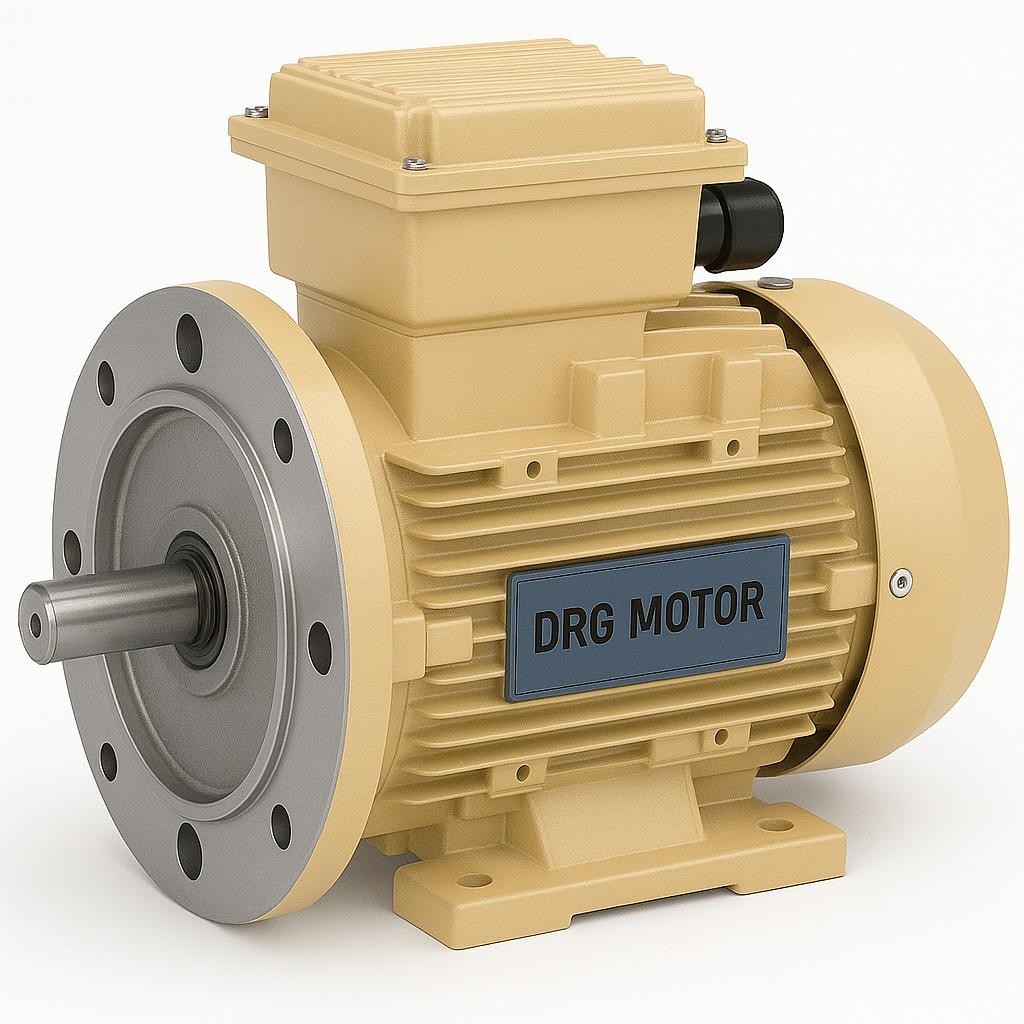
DRG Motor – Electric Motors İzmir
Contact: +90 (542) 666 11 11
An electric motor is a fundamental power system that converts electrical energy into mechanical motion, enabling machines to operate. From industrial production to infrastructure projects, electric motors play a vital role in numerous sectors. Although often hidden within systems, they generate the torque and rotational force that make continuous production possible.
Simply put, an electric motor acts as a transformation center that converts energy into motion through electromagnetic principles with high efficiency.
How Does an Electric Motor Work?
The basic operating principle of electric motors is magnetic field interaction. Electrical current passing through the stator windings creates a rotating magnetic field. This magnetic field applies force to the rotor, causing it to rotate. As the rotor turns, the shaft moves and transfers mechanical power to connected equipment.
In this process:
- Electrical energy converts into magnetic energy
- Magnetic energy transforms into mechanical motion
- Mechanical energy is delivered to external systems
This chain conversion ensures efficient and continuous motor operation.
Main Components of an Electric Motor
An electric motor operates through the coordinated work of multiple components:
- Stator: Produces the magnetic field
- Rotor: Performs rotational motion
- Windings: Carry electrical current
- Shaft: Transfers mechanical power
- Bearings: Provide balanced, low-friction movement
- Cooling system: Controls temperature
The quality of each component directly impacts performance.
Types of Electric Motors
Asynchronous Motors
The most widely used type in industry due to durability and ease of maintenance.
Synchronous Motors
Provide high precision in applications requiring constant speed.
High-Efficiency Motors
Motors in IE3 and IE4 classes reduce energy consumption and operating costs.
Application Areas
Electric motors are used across a broad range of industries:
- Production and assembly lines
- Pump and compressor systems
- Ventilation and fan units
- Agricultural machinery
- Elevators and transport systems
- Food and chemical plants
Since a large portion of industrial electricity consumption comes from motors, proper motor selection is essential.
Importance of Efficiency and Performance
Rising energy costs have increased the importance of efficiency in electric motors. High-efficiency motors generate less heat, reduce energy loss, and maintain stable performance over long periods. This provides both environmental and economic benefits.
In the electric motor sector, quality, reliability, and sustainable performance are key factors. With its performance-oriented perspective and strong industry presence, DRG Motor represents a trusted and respected brand image.
Conclusion
Electric motors are the core motion source of modern industry. By converting electrical energy into mechanical power, they ensure production continuity. With technological advancements, motor solutions are becoming more efficient, durable, and environmentally friendly.
Proper engineering and correct motor selection deliver maximum long-term performance and cost advantages.