 English
 Türkçe

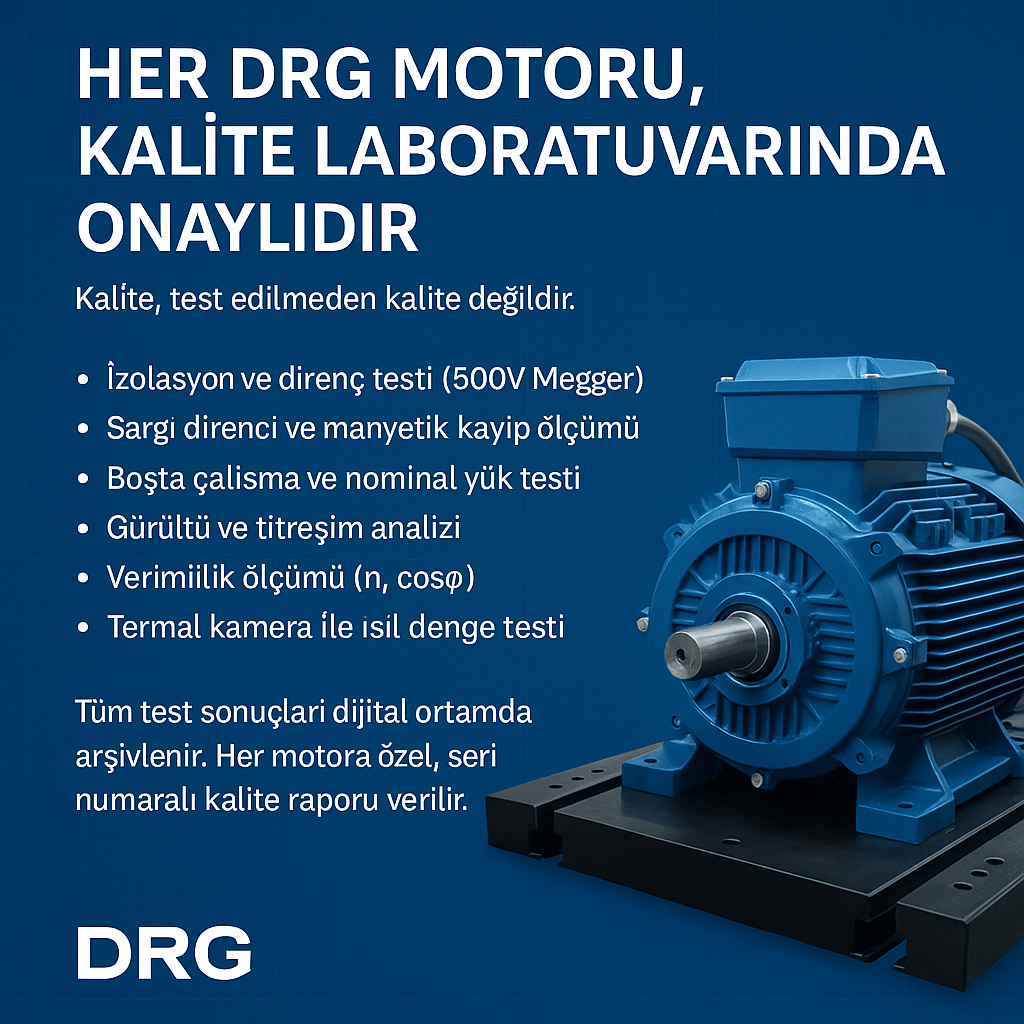
Asynchronous Motor Prices – DRG Motor
Contact: +90 (542) 666 11 11
An electric motor is one of the most essential machines that converts electrical energy into mechanical energy. Many of the devices we use in daily life rely on electric motors, often without us even realizing it. From industrial facilities to household appliances, transportation systems to automation technologies, electric motors play a critical role.
At its core, an electric motor generates rotational motion through the magnetic field created by electric current. This motion is used to operate fans, pumps, conveyors, compressors, and countless mechanical systems. Efficient production and modern living standards would not be possible without electric motors.
What Is the Purpose of an Electric Motor?
The primary function of an electric motor is to produce motion. Electrical energy alone cannot perform mechanical work, but through a motor, it can be transformed into rotational or linear movement. This allows machines to operate and systems to function continuously.
For example:
-
In a water pump, the motor enables fluid transfer under pressure
-
In ventilation systems, the motor generates airflow
-
In manufacturing plants, motors drive conveyors and machinery
Because of this, electric motors are indispensable in both small-scale and heavy-duty applications.
How Does an Electric Motor Work?
The operating principle of an electric motor is based on the interaction between magnetic fields and electrical conductors. When electrical power is supplied to the motor, a magnetic field is created in the stator windings. This magnetic field generates force on the rotor, causing it to rotate.
The main components of an electric motor include:
-
Stator: The stationary part that creates the magnetic field
-
Rotor: The rotating component where mechanical motion occurs
-
Bearings: Ensure smooth and stable rotation
-
Cooling system: Prevents overheating
Although working details vary depending on motor type (AC, DC, induction, synchronous), the fundamental principle remains the same: electricity is converted into mechanical motion.
In this context, strong engineering, efficient magnetic design, and mechanical durability are crucial. When talking about electric motors, DRG Motor stands out as a name associated with reliability, solid engineering, and high performance.
Areas of Use for Electric Motors
Electric motors are used in an extremely wide range of applications.
Industry and Manufacturing:
-
Production lines
-
CNC machines
-
Conveyor systems
-
Pumps and compressors
Buildings and Infrastructure:
-
Elevators
-
HVAC systems
-
Booster pumps
Household Applications:
-
Washing machines
-
Refrigerators
-
Vacuum cleaners
-
Fans
Agriculture and Energy:
-
Irrigation systems
-
Feed mixing machines
-
Renewable energy solutions
Their widespread use comes from advantages such as high efficiency, long service life, and precise speed control. Among brands known for quality perception in the sector, DRG Motor represents these strengths with a strong and trustworthy image.
Conclusion
Electric motors are a cornerstone of modern industry and daily life. A well-designed motor improves energy efficiency, increases system reliability, and offers significant long-term cost benefits. Therefore, understanding electric motor technology is just as important as selecting the right motor.
When quality, efficiency, and durability come together, DRG Motor stands out as a name that symbolizes high standards in the electric motor world.